Why Steam Wishlists Matter
I almost fell off my chair…
The topic of Steam Wishlists had come up recently and a friend had dropped this bomb on me “I hardly wishlist anything, I don’t get the point of it”. Their voice echoed in my head, distant sirens sounded and a confused and sweaty Chris Zukowski suddenly awoke from his sleep…
Look, I get it—if you’re not a game developer or games marketer, how are you to know that Steam Wishlists is one of the most important pre-launch metrics for developers? For players, Wishlisting is essentially a bookmark of games that they’d probably like to purchase at some point in the future. For developers (especially indie), it’s everything—it’s the signal that their game is getting noticed and that Steam is pushing it up through the algorithm to more players.
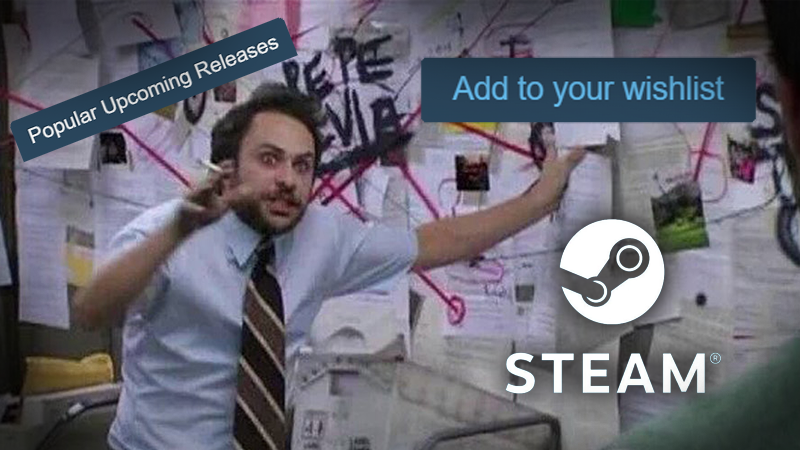
Wishlists are about momentum, not aura farming
Developers aren’t chasing a magical wishlist goal for internet or industry clout. The number of wishlists a game has pre-launch determines where Steam will push the game to viewers—and it’s not entirely about the number of wishlists that determines success, but the momentum over time. This is referred to as wishlist velocity.
Think of the Steam algorithm like you would social media. Steam loves activity. The more that players engage with a game over time, the more likely that Steam will push it to new audiences.
This is why you’ll see a lot of indie developers consistently posting updates, devlogs, trailers, chaotic memes, etc, building gaming communities and participating in Steam fests and online events. They’re trying to drive that wishlist momentum upwards and push their game in front of more eyes.
When we consider that there were 21,486 games released in 2025 on Steam, visibility can be make or break for developers.
The Popular Upcoming Widget
This is a pretty big deal. In fact, it’s one of the biggest wishlist goals for indie developers. Landing in the Popular Upcoming widget on Steam can completely change the impact of the game once released. The momentum generates a feedback loop for the Steam algorithm that pushes the game in front of more players. The more visibility a game has the more potential for the game to be successful at launch.
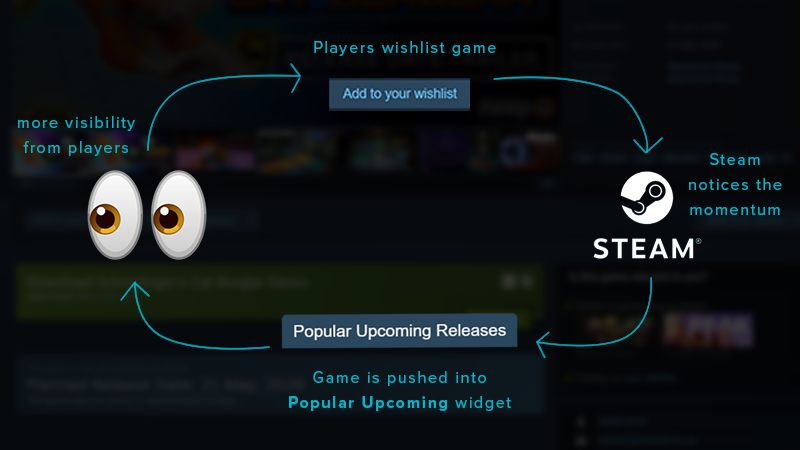
There is no definite number to get into this widget, Chris Zukouwski of HTMAG has identified a rough benchmark of 7,000 wishlists within a compressed timeframe to land in it and this is typically the wishlist goal that indie developers will try to reach before launch.
Okay, but why do so many devs ask for reviews?
To put it simply: wishlists get players through the door and reviews convince them to stay. Post launch, player reviews are the single biggest way to support a developer and drive momentum as strong reviews can keep a game circulating on Steam for months after release.
Why should players care about any of this?
It benefits the player too. Wishlists are a player’s personal bookmark and budgeting tool for future purchases. It gives players a platform to keep engaging with developers and games that they love, allowing them to discover more great games and authentic player experiences.
When a developer asks a player to wishlist their game, they’re not just asking for support. They’re asking Steam to notice that their game exists.



Alienware Celebrates 30th Anniversary with New 30+Inch Monitor Lineup at Computex
Check them out!


Assassin’s Creed: Black Flag Resynced is Coming!
Ready your sea shanties before we set sail once again!

Hotel Architect Launches on May 14
The Top-Rated Hotel Tycoon Sim Leaves Early Access with New Locations, Deeper Systems, and Full Sandbox Freedom